
10 Reasons Why Preschool Is Important for Your Child
The first few years of a child’s life are often called the “foundation years.” During this time, children grow at a pace that is faster than at any other stage of life. Their brains make millions of new connections every day, shaping how they learn, feel, and interact with the world. Research shows that nearly 85% of brain development happens before the age of six. This makes preschool education one of the most important steps in preparing children for school and life.
Parents often wonder, “Is preschool really necessary? Can’t children just start directly in kindergarten?” The truth is, preschool offers unique experiences that go far beyond academics. It lays the groundwork for emotional growth, social skills, creativity, and even early digital awareness in today’s tech-driven world.
Here are 10 powerful reasons why preschool is important for your child and how it shapes their journey of learning and growth.
1. A Strong Start for Lifelong Learning
Preschool is often a child’s first structured learning environment outside the home. It helps children take their first steps into the world of early childhood education. Through play, songs, stories, and guided activities, they discover that learning can be fun.
Children learn letters, numbers, colors, and shapes—but in a way that feels like play, not pressure. Simple activities like matching games or rhymes spark curiosity and make children excited about learning. This early love for exploration builds a strong foundation for future academic success.
2. Social Skills and Friendships
One of the biggest benefits of preschool is the chance to interact with other children. At home, many children only play with siblings or adults. In preschool, they meet children their own age, which teaches them important social skills.
They learn how to:
Share toys and materials
Take turns
Work together on group activities
Resolve small disagreements
These everyday experiences help children build friendships, understand teamwork, and develop empathy. More importantly, they begin to feel like part of a community—a valuable skill for school and life.
3. Emotional Development and Confidence
Starting preschool is often the first time children spend time away from parents. While this may feel overwhelming at first, it helps them become more independent. Teachers provide a nurturing environment where children learn how to express their feelings, manage emotions, and build confidence.
When a child completes a puzzle, recites a rhyme, or paints a picture, they feel proud of their achievement. Positive encouragement from teachers and peers builds self-esteem. Preschool also teaches resilience—children learn that it’s okay to make mistakes and try again. These early experiences shape emotionally healthy, confident learners.
4. Boosting Language and Communication
Preschool years are crucial for language development. Children at this age are naturally curious and eager to talk about everything they see and feel. In preschool, they are surrounded by conversations, songs, stories, and discussions that expand their vocabulary and communication skills.
Storytelling, rhymes, and group discussions help them learn new words and how to use them in sentences. They also practice listening—an equally important skill. Over time, children learn to ask questions, express ideas, and share thoughts clearly. Strong communication skills at this stage prepare them for academic success and healthy social interactions.
5. Early Cognitive Growth
Children are natural problem solvers, and preschool gives them the right environment to practice these skills. Activities like sorting shapes, building with blocks, or identifying patterns help children develop cognitive abilities such as memory, attention, and logical thinking.
Simple science experiments—like watching seeds grow or mixing colors—encourage curiosity and observation. Math skills begin to form through counting games and puzzles. Preschool teachers design activities that challenge children to think, compare, and make connections. These experiences create the stepping stones for strong academic growth.
6. Motor Skills and Physical Development
Preschool isn’t just about reading and numbers—it also plays a big role in physical growth. Daily activities are designed to build both fine motor skills (like holding a crayon, cutting paper, or threading beads) and gross motor skills (like running, jumping, and balancing).
Climbing, outdoor games, and dance improve coordination and strength, while arts and crafts enhance hand-eye coordination. These activities not only promote health and fitness but also prepare children for tasks like writing, tying shoelaces, and handling everyday objects confidently.
7. Encouraging Creativity and Imagination
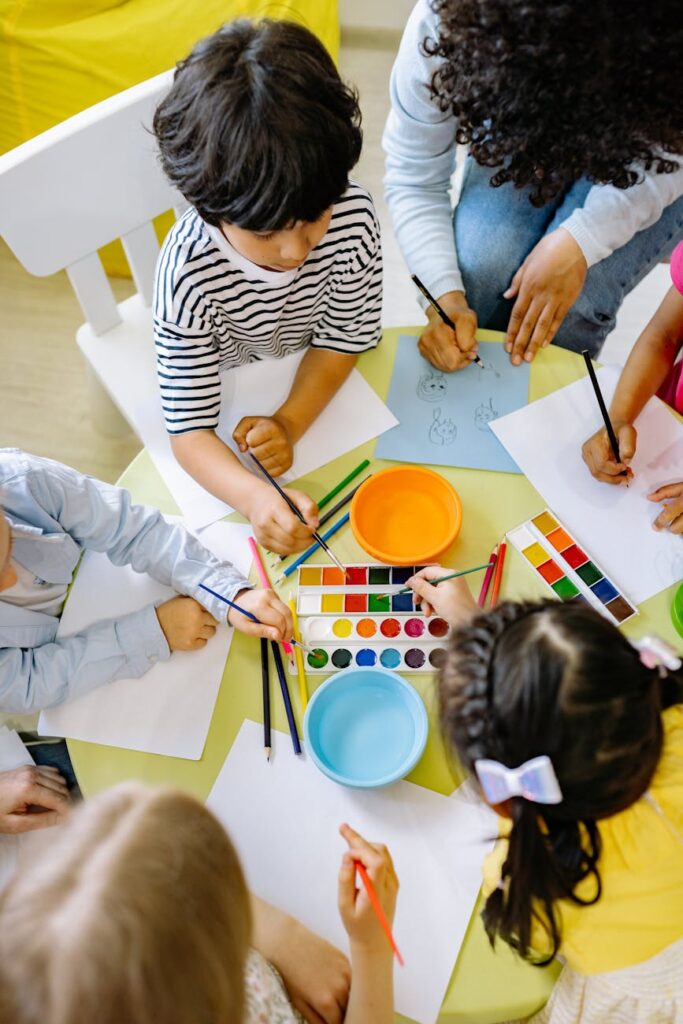
Children are naturally creative, and preschool gives them endless opportunities to express themselves. Art, music, dance, and pretend play allow them to explore their imagination freely. Whether it’s painting with fingers, building castles with blocks, or pretending to be a doctor, children learn to think outside the box.
Teachers guide them to express ideas, experiment with materials, and solve problems creatively. These experiences nurture innovation and flexibility—qualities that are valuable not just in academics but in life. Preschool is often the place where children’s talents and interests first begin to shine.
8. Learning Independence and Responsibility
Preschool is where children first experience small responsibilities on their own. Simple tasks like packing away toys, washing hands, or choosing their own activity teach independence.
Over time, children develop confidence in doing things without constant help. They also learn responsibility—taking care of their belongings, respecting classroom rules, and completing activities. These small steps prepare them for the structure and expectations of kindergarten, while also giving them a sense of pride in their abilities.
9. Preparing for Kindergarten
Transitioning directly from home to kindergarten can be overwhelming. Preschool acts as a bridge between home and formal schooling. It introduces children to routines, schedules, and classroom behavior in a playful, low-pressure way.
By the time they enter kindergarten, preschoolers are already familiar with listening to instructions, working in groups, and focusing on tasks for longer periods. They also have early literacy and numeracy skills, which make the shift to more formal academics smoother and less stressful.
10. A Lifelong Love for Learning
Perhaps the most important reason preschool matters is that it helps children develop a love for learning. When children see that school is a place filled with fun, creativity, and discovery, they become naturally curious learners.
Preschool shows them that challenges are exciting, that mistakes are part of growth, and that learning can happen everywhere—whether in a storybook, a garden, or a digital app. This mindset encourages children to remain open, curious, and motivated throughout their educational journey.
The Role of Parents in Preschool Education
Preschool works best when parents and teachers work together. Parents play an important role in reinforcing learning at home. Reading together, engaging in creative play, or even talking about the day helps children connect school experiences with home life.
Maintaining open communication with teachers allows parents to track progress and support their child’s growth more effectively. Celebrating small achievements—like learning a new word or completing a drawing—boosts a child’s confidence and encourages them to keep trying.
When parents and preschool educators work hand-in-hand, children experience consistent support that strengthens their overall development.
Why Techcubs Preschool?
At Techcubs Preschool, we believe children need the best of both worlds—traditional preschool teaching methods that focus on play, social interaction, and creativity, combined with technology integration that prepares them for the digital age.
Our classrooms are nurturing spaces where children explore storytelling, art, and outdoor play while also being introduced to safe, age-appropriate digital tools. The goal is to help children grow into confident, curious, and responsible learners who are ready for school and the future.
Choosing the right preschool is a big decision for every parent. At Techcubs, we make sure your child’s first learning experience is joyful, enriching, and full of discovery.
Come visit Techcubs Preschool and see how we prepare children for tomorrow while celebrating the magic of childhood today. Schedule your visit today !