The first five years of a child’s life are nothing short of miraculous. During this short period, a baby transforms from a tiny newborn into a curious, expressive, and intelligent little learner. What makes these years so important? Science shows that up to 90% of a child’s brain development occurs before the age of five.
At TechCubs Preschool, we believe that every smile, every question, and every playful discovery builds the foundation of lifelong learning. Understanding how a child’s brain grows helps parents and educators nurture that growth intentionally.
Let’s take a journey through the first five years inside your child’s amazing brain.
1. The Brain Growth Curve: Building Billions of Connections
When a baby is born, their brain is about one-quarter the size of an adult’s. But growth happens at lightning speed—by age three, it reaches almost 80% of its adult size, and by five, around 90%.
This growth doesn’t just mean the brain gets bigger; it means billions of neural connections are forming every second. Every sound a baby hears, every touch they feel, and every word spoken to them shapes these connections.
Birth to 1 year: Sensory pathways—seeing, hearing, feeling—develop rapidly. A baby’s brain is absorbing language tones, recognizing faces, and forming emotional bonds.
Ages 1–3: The language centers explode with activity. Toddlers begin understanding simple instructions, using words, and exploring cause and effect.
Ages 3–5: Higher cognitive areas—memory, reasoning, and social understanding—start linking together. This is when children begin to solve problems, control impulses, and express emotions more clearly.
Every cuddle, story, and conversation literally wires their brain for learning and emotional well-being.
2. Play = Brain Power
If there’s one thing preschoolers love, it’s play—and for good reason! Play is not just fun; it’s the brain’s favorite way to learn.
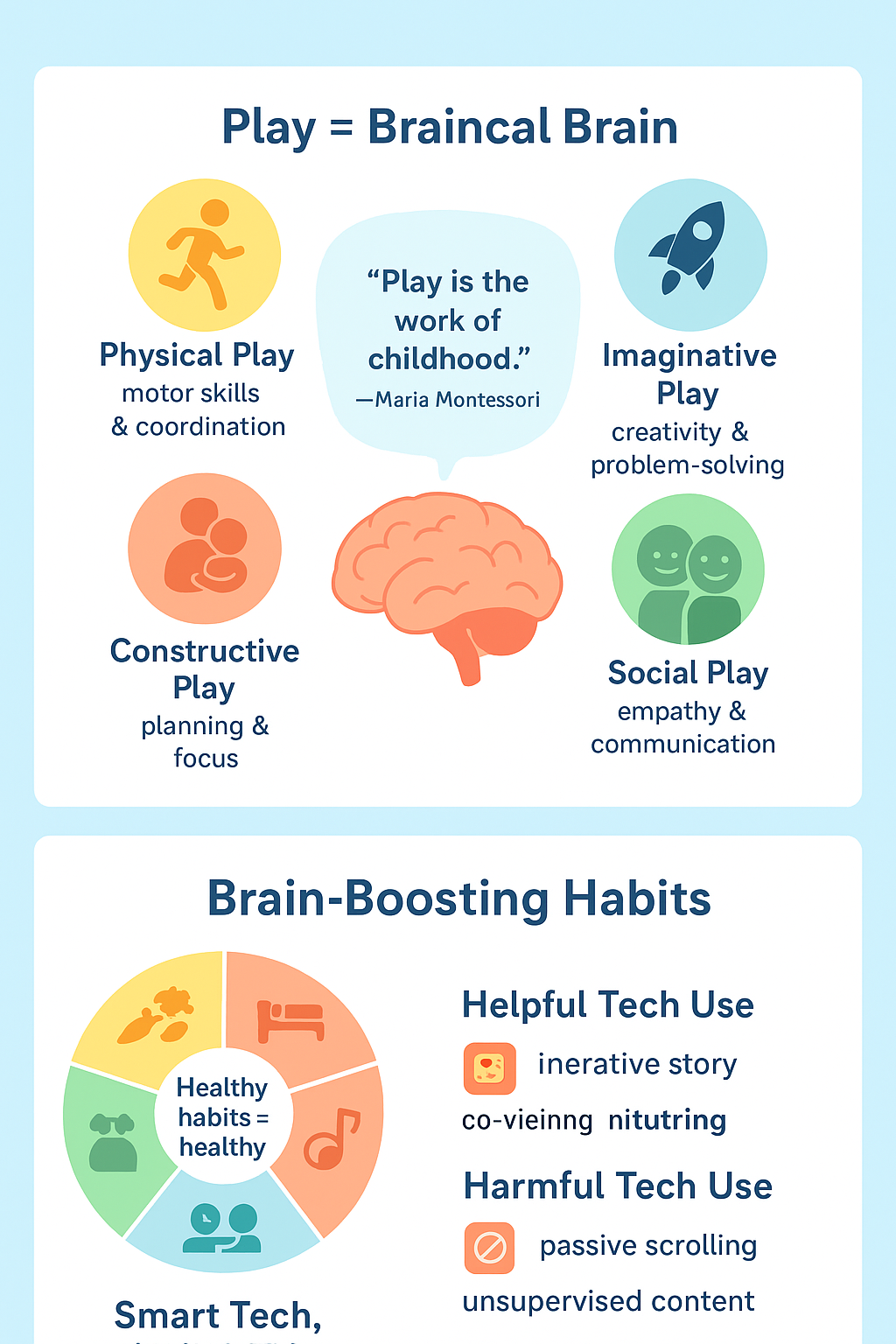
Different types of play stimulate different parts of the brain:
-
Physical Play builds coordination and strengthens motor pathways.
-
Imaginative Play boosts creativity, problem-solving, and storytelling.
-
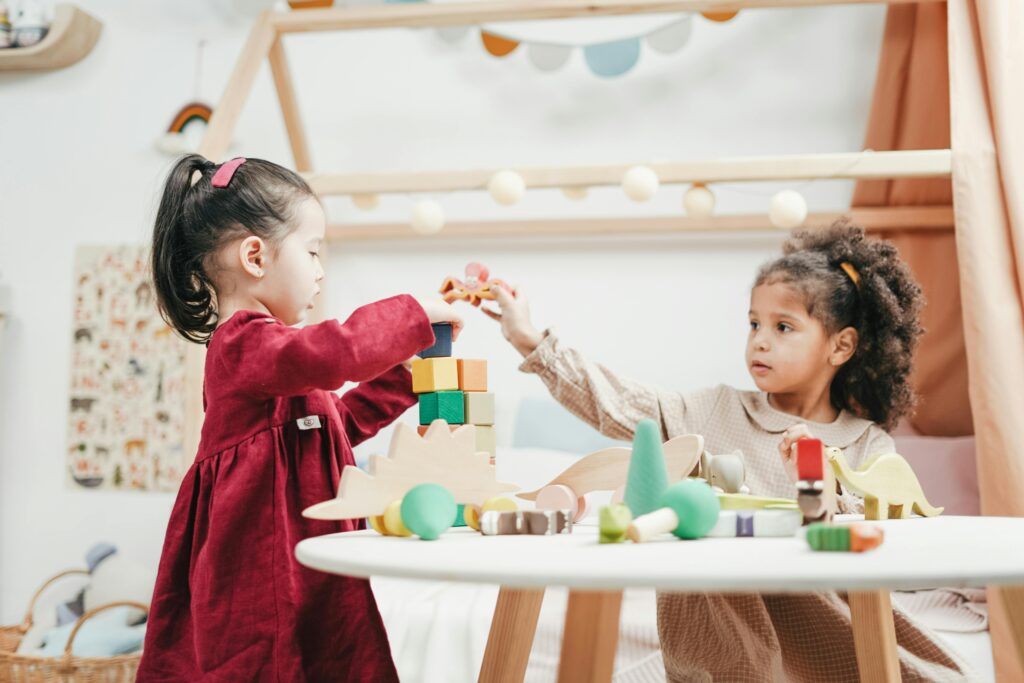
Constructive Play—like building blocks or puzzles—develops planning and focus.
-
Social Play teaches empathy, sharing, and communication.
Neuroscientists say that during play, the brain releases dopamine—a “feel-good” chemical that enhances memory and motivation. That’s why learning through play, as we practice at TechCubs, is so effective.
As Maria Montessori famously said, “Play is the work of childhood.”
3. The Emotional Brain: Why Love Matters Most
While intellectual growth gets much attention, emotional development is just as critical. The brain’s emotional center—the amygdala—helps children recognize and respond to feelings. The prefrontal cortex, which manages decision-making and impulse control, continues developing well into adolescence.
In early childhood, a nurturing environment is essential for both. When children feel safe, loved, and understood, their brains release oxytocin and serotonin—chemicals that promote calmness and curiosity. When stress is high or relationships are inconsistent, the opposite happens; learning can shut down.
That’s why relationships are the heart of everything we do at TechCubs. Our teachers build strong emotional bonds, creating a space where children feel secure enough to explore, question, and grow.
4. Brain-Boosting Habits for Growing Minds
Healthy brains need more than just stimulation—they need the right fuel, rest, and balance. Here are some habits that have a big impact:
1. Nutrition
Foods rich in healthy fats, iron, and vitamins (like avocados, eggs, and whole grains) support memory and concentration. Omega-3s, in particular, are vital for building neural tissue.
2. Sleep
Preschoolers need around 10–12 hours of sleep per night. During sleep, the brain consolidates memories and recharges for learning.
3. Music and Reading
Reading aloud and listening to music strengthen language and emotional connections. Rhythm and rhyme improve listening and sequencing skills.
4. Outdoor Play
Fresh air and physical activity promote sensory development and coordination. Nature play also reduces stress and improves focus.
5. Routine
Predictable schedules give children a sense of safety and control, helping their brains focus on learning instead of worrying about what’s next.
At TechCubs, our daily structure balances active play, quiet reflection, and consistent routines—helping children feel both stimulated and secure.
5. Smart Tech, Smart Kids
Technology is part of modern childhood, but moderation and supervision are key. The goal isn’t to eliminate screens—it’s to use them wisely and purposefully.
Helpful tech use includes interactive story apps, creative drawing tools, or guided educational videos watched together with a parent or teacher. Co-viewing helps children process what they see, turning digital time into shared learning moments.
Harmful tech use—such as passive scrolling or unsupervised screen time—can interfere with sleep, attention span, and emotional regulation.
At TechCubs, we integrate technology responsibly through hands-on STEM activities, digital art, and interactive lessons that complement—not replace—real-world play.
6. How TechCubs Nurtures the Growing Brain
At TechCubs Preschool, every part of our day is designed to support brain development holistically—intellectually, emotionally, and socially. Here’s how:
-
Circle Time builds communication and confidence as children share ideas and stories.
-
STEM Play (science, technology, engineering, math) sparks curiosity and logical thinking.
-
Art and Music nurture creativity, coordination, and emotional expression.
-
Outdoor Exploration strengthens sensory integration and physical health.
-
Mindful Moments teach self-awareness and calmness, building emotional intelligence.
By blending play, care, and curiosity, we help each child’s brain grow stronger and more connected—one joyful experience at a time.
7. The Power of Parents and Caregivers
The preschool years aren’t just a time for children to grow—they’re a time for parents to learn, too. You are your child’s first and most important teacher. The way you talk, play, and respond shapes their developing mind.
Here are a few ways parents can make a difference every day:
-
Talk and listen often. Even simple conversations boost language development.
-
Respond with empathy. Label emotions: “You’re sad because your toy broke.”
-
Read daily. Books expand vocabulary and imagination.
-
Limit screens. Encourage real-world play and family interaction.
-
Celebrate curiosity. When your child asks “why,” it means their brain is connecting dots!
Conclusion: Every Moment Matters
In just five short years, a child’s brain builds the foundation for everything that follows—how they think, learn, feel, and relate to the world. Those early experiences, rich with play, love, and discovery, are the building blocks of lifelong success.
At TechCubs Preschool, we’re proud to be part of that journey. By combining brain-based learning, caring relationships, and creative exploration, we help every child reach their full potential—one neuron, one smile, and one discovery at a time.
Discover how TechCubs Preschool nurtures bright minds and big hearts. Visit Techcubs Preschool to learn more about our play-based early learning programs.